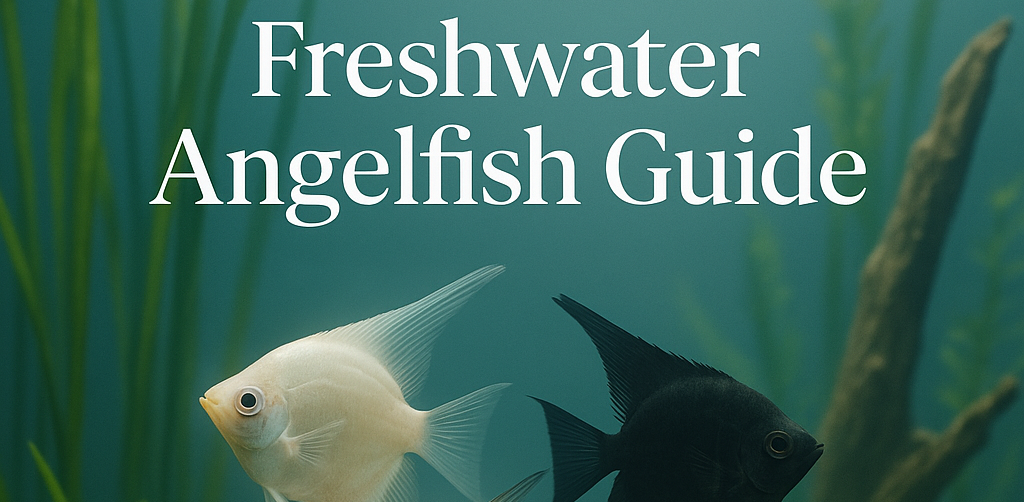
Freshwater Angelfish
TL;DR: Freshwater angelfish are stunning cichlids prized for their shape, colors, and personality.
This guide includes:
Key species
Popular colors
Tank conditions
Feeding tips
Breeding basics
How to choose healthy fish for your aquarium.
What Defines Freshwater Angelfish and Why They’re Popular?
Freshwater angelfish have flat bodies. Their tall dorsal and anal fins form a striking triangle shape in aquariums. They add beauty and movement to community tanks and appeal to both beginners and experienced fishkeepers. Their elegant shape and behavior make them favorites in the aquarium hobby.
What Species of Freshwater Angelfish Exist?
There are three primary species of freshwater angelfish kept by hobbyists:
Pterophyllum scalar
This is the most common species in aquariums. It grows to about 6 inches tall and offers many color morphs due to selective breeding.
Pterophyllum altum
Known as the giant angelfish, it can grow taller (often beyond standard scalare sizes) and shows a steeper forehead profile. It requires more specific water conditions than scalare
Pterophyllum leopoldi
The rarest in hobby circles, this species is smaller with fewer vertical stripes and is uncommon in pet stores.
What Color Varieties of Angelfish Are Popular?
Selective breeding has produced many striking color and pattern variants. Common varieties hobbyists seek include:
Silver Angelfish: Classic wild-type look with vertical black stripes.
Zebra Angelfish: Bold, contrasting stripes across the body.
Koi Angelfish: Orange, black, and white patches reminiscent of koi carp.
Marble Angelfish: Marbled combinations of black, white, and gold hues.
Black Lace & Black Angelfish: Elegant dark-patterned or solid black fish.
Each variety has its unique visual appeal and adds color and contrast to your aquarium setup.
What Aquarium Conditions Do Freshwater Angelfish Need?
Water Parameters
Maintain stable water conditions tailored to angelfish comfort:
Temperature: Around 75–86°F (24–30°C)
pH Level: 6.0–8.0 (slightly acidic to neutral)
Water Hardness: 5–13 dB These conditions mimic the gentle waters of their native South American habitats.
Tank Size & Shape
A single adult needs at least 20 gallons, with larger groups needing 30 gallons or more. Tanks with height are better than long, shallow tanks.
Aquarium Environment
Plants like Java fern, Amazon swords, and Java moss provide shelter and spawning surfaces. Fine sand or smooth gravel is ideal as substrate to protect delicate mouths and fins. Gentle water flow helps simulate natural conditions.
How Should You Feed Freshwater Angelfish?
A balanced diet keeps angelfish healthy and colorful:
Staple Foods: Tropical flake or pellet food formulated for cichlids.
**Supplements:** Live or frozen bloodworms and brine shrimp add protein and promote natural behavior.
Feeding Tip: Feed 2–3 times daily in portions they can finish in a few minutes to avoid overfeeding and water quality issues.
Consistent diet variety supports growth and enhances color patterns.
What Do You Need for Breeding Freshwater Angelfish?
Breeding freshwater angelfish is rewarding but requires patience and proper setup:
Raise a group of juveniles together so they choose mates naturally.
A breeding pair will claim a space and prepare a smooth surface for eggs.
After laying eggs, both parents guard and fan them to improve oxygen flow.
Eggs hatch in a few days, and fry become free-swimming shortly after.
Providing optimal water conditions and hiding areas increases breeding success.
How Do You Choose Healthy Freshwater Angelfish to Buy?
Look for key health indicators before purchasing:
Thick bodies and heads rather than sunken shapes
Clear, bright eyes
Active feeding behavior
Intact fins without tears or rot
Buying juveniles around 0.8–1.2 inches helps them acclimate and grow in your aquarium.
Which Tank Mates Are Compatible With Angelfish?
Suitable companions for freshwater angelfish include:
Peaceful gouramis that share similar water needs
Plecos and bottom-dwellers that stay out of mid-water territory
Corydoras catfish as scavengers
Larger tetras that are not small enough to be eaten
Avoid fin-nipping or overly small fish that may be harassed or consumed.
Why Freshwater Angelfish Remain Popular Worldwide
Freshwater angelfish attract fans with their beauty, personality, and variety. Their elegant swimming, unique feeding behavior, and wide range of colors make them classics for aquariums of all sizes.
Whether you’re getting your first angelfish or adding rare types, knowing the species differences is key. You’ll also need to understand tank needs, feeding, and breeding. This knowledge helps you keep your fish healthy and vibrant for years.
FAQ
What are the main species of freshwater angelfish?
The three main species are:
Pterophyllum scalare: a common aquarium species.
Pterophyllum altum: larger and more demanding.
Pterophyllum leopoldi: smaller and rarer.
What are popular angelfish color varieties?
Common types are silver, zebra, marble, koi, albino, black lace, platinum, and blushing morphs.
What water conditions do angelfish prefer?
They thrive in warm water (75–86°F), slightly acidic to neutral pH (6.0–8.0), and moderate hardness (5–13 dH).
How big should an angelfish tank be?
A single adult needs at least 20 gallons, with larger tanks needed for groups or community setups.
Can freshwater angelfish be bred in home aquariums?
Yes, you can breed by letting juveniles pair naturally. Provide bare surfaces for egg laying and keep water conditions stable.
What should I consider when choosing angelfish to buy?
Look for thick bodies, clear eyes, intact fins, and active behavior. Juveniles adapt better and develop colors as they grow.