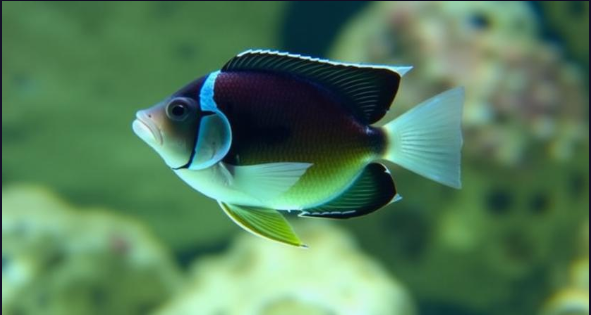
Saltwater Angelfish
If you’ve ever paused at an aquarium store, drawn to a fish that seems hand-painted with neon colors, you were likely seeing a saltwater angelfish. These creatures are the undisputed royalty of the marine aquarium hobby. With their bold personalities and vibrant patterns, they are often the centerpiece of a tank.
However, keeping these marine beauties isn’t quite as simple as dropping them into water. Many excited beginners buy juvenile Emperor Angelfish for a 30-gallon tank. Then, a year later, they find they have a foot-long fish on their hands.
Planning your first saltwater setup or adding an eye-catching fish? This guide shares key tips for keeping saltwater angelfish healthy and thriving.
What Are Saltwater Angelfish?
Saltwater angelfish belong to the family Pomacanthidae. They are different from the flat, triangular freshwater angelfish (Pterophyllum) commonly found in community tanks. While they share a name, they require vastly different environments.
Marine angelfish are found on shallow reefs in the tropical Atlantic, Indian, and Pacific Oceans. In the U.S. hobby, they are prized for their intelligence and “puppy-dog” behavior. Once acclimated, many owners report that their angels recognize them, swimming to the front of the glass when they enter the room.
These fish are generally categorized into two groups:
- Large Angelfish (Pomacanthus, Holacanthus): These grow massive and are incredibly showy.
- Dwarf Angelfish (Centropyge): These stay small and are better suited for typical home aquariums.
Popular Types of Saltwater Angelfish
There are over 80 species of marine angelfish, but only a handful are common in the trade. Let’s look at two specific types that often generate questions regarding color and classification.
Green Angelfish (Holacanthus ciliaris)
Hobbyists looking for a “Green Angelfish” often mean the beautiful Queen Angelfish (Holacanthus ciliaris). “Queen” is the common trade name. Their colors blend electric blue and vibrant yellow. Under actinic aquarium lighting, they often appear as a shimmering green.
Appearance and Color Patterns: The Queen Angelfish is one of the most beautiful fish in the ocean. Adults sport a dark blue spot on their forehead speckled with a bright blue ring, resembling a crown. Their bodies are a wash of blue and yellow scales that create that iridescent green appearance.
Natural Habitat and Behavior: These fish are grazers. You can find them throughout the Western Atlantic, from Florida to Brazil. In the wild, they spend their day picking at sponges and tunicates. In captivity, they can be somewhat territorial.
Care Difficulty Level: This is not a fish for beginners. They require pristine water quality and a very large tank (180+ gallons) due to their size and swimming habits. They are also prone to nutritional deficiencies if not fed a diet rich in sponge material.
Silver Angelfish in Saltwater Aquariums
There is often confusion surrounding the term “Silver Angelfish.” In the freshwater world, silver angels are the standard. In the saltwater hobby, true silver-colored angelfish are rarer, but they do exist.
Visual Traits and Size: The most common silver marine angel is the Lamarck’s Angelfish (Genicanthus lamarck). These fish differ from their flashy cousins. They show subtle elegance with horizontal black stripes over a silver-white body. They typically grow to about 9 inches.
Lamarck’s angels stand out among marine fish. They are planktivores, meaning they eat floating food. This makes them different from grazers. This makes them one of the few truly “reef-safe” large angels. They rarely nip at corals. They are generally peaceful and can even be kept in pairs or harems, which is rare for angelfish.
Best Tank Conditions: Because they are open-water swimmers, they need a long tank (at least 6 feet) to stretch their fins. They thrive in high-flow environments that mimic the reef crests where they naturally hunt for plankton.
How Big Do Saltwater Angelfish Get?
One of the most critical questions to ask before buying is: How big do angelfish get? The answer varies wildly depending on the species.
Average Size by Species
- Dwarf Angels (e.g., Coral Beauty, Flame Angel): These top out at 3 to 4 inches. They are manageable for intermediate hobbyists.
- Medium Angels (e.g., Lamarck’s, Regal Angel): These typically reach the 8 to 10-inch range.
- Large Angels (e.g., Emperor, French, Queen): These are the tank busters. A French Angelfish can easily reach 15 to 18 inches in captivity.
Growth Expectations in Home Aquariums
Saltwater angelfish grow slowly compared to some predatory fish. However, they grow at a steady pace. A juvenile Emperor Angel purchased at 2 inches can reach 6 or 7 inches within two years if fed well.
Tank Size Recommendations Based on Growth
Don’t buy a fish for the tank you plan to have; buy one for the tank you have now.
- For Dwarfs: A 55-gallon tank is the comfortable minimum.
- For Large Angels: You need 180 gallons minimum, with 220+ gallons being ideal for full-grown adults.
Care Requirements for Saltwater Angelfish
Success with angelfish comes down to stability. These fish do not tolerate fluctuations in their environment well.
Tank Size and Setup
Minimum Tank Size: As mentioned, size matters. But beyond volume, shape is important. Angelfish are active swimmers. A 4-foot-long tank is better than a tall, narrow tank of the same volume.
Rockwork and Hiding Spaces: Angelfish are grazers and need “live rock” to pick at. Mature live rock provides natural algae and sponges that supplement their diet. Additionally, they need caves. Despite their boldness, angelfish sleep in rock crevices and need a place to retreat if they feel threatened.
Water Parameters: Aim for standard reef parameters:
- Temperature: 72°F – 78°F
- Salinity (Specific Gravity): 1.020 – 1.025 (Keep it stable; use an auto-top-off system).
- pH: 8.1 – 8.4
- Ammonia/Nitrite: 0 ppm (Strictly required).
Diet and Feeding Habits
What Saltwater Angelfish Eat: In the wild, many angelfish eat sponges. In captivity, you cannot just feed them flake food. You must look for frozen preparations specifically labeled for angelfish containing sponge matter. Spirulina and marine algae (nori) sheets should also be a staple.
Store-Bought vs. Natural Foods: High-quality pellets, like New Life Spectrum or Hiker, are great bases. But I always suggest adding frozen Mysis shrimp and fresh clams on the half-shell. This helps maintain their vibrant colors and immune systems.
GloFish Angelfish – Freshwater vs Saltwater Confusion
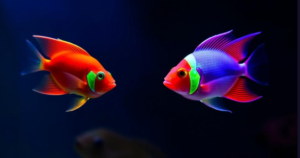
Walk into a big-box pet store in the U.S., and you will see glowing neon fish labeled “GloFish.” This leads to a common question: Are there saltwater GloFish?
Are GloFish Angelfish Real? Yes, GloFish angelfish exist, but they are freshwater fish. They are genetically modified versions of the standard freshwater angelfish (Pterophyllum scalare).
**Why GloFish Are Freshwater Only:** GloFish only modifies freshwater species. These include Danios, Tetras, Barbs, Sharks, Bettas, and Angels. There is no such thing as a saltwater GloFish angelfish. If you put a GloFish angel in a saltwater tank, it will not survive.
Common Beginner Misconceptions: Many beginners assume “colorful” means “saltwater.” Don’t mix up the natural glow of a Queen Angelfish with the artificial light of a GloFish.
Are Saltwater Angelfish Good for Reef Tanks?
This is the most debated topic in the hobby.
Reef-Safe vs. Semi-Aggressive Behavior: Most large angelfish are not reef-safe. They view corals, specifically fleshy LPS (Large Polyp Stony) corals and Zoanthids, as food. Dwarf angels (Centropyge) are considered “reef-safe with caution.” I have kept Coral Beauty angels that never touched a coral, and others that decided my expensive Scolymia coral was a delicious snack. It often depends on the individual fish.
**Coral Compatibility Risks:** To keep corals with angels, pick SPS (Small Polyp Stony) corals or sturdy soft corals, like some leathers. These are less appealing to them. Genicanthus species (like the Lamarck’s mentioned earlier) are the only 100% reef-safe bet.
Best Practices for Reef Aquariums: If you introduce an angel to a reef tank, keep them well-fed. A hungry angelfish is a curious angelfish, and curiosity usually leads to nipping corals.
Common Mistakes to Avoid with Saltwater Angelfish
Overstocking: Angelfish produce a lot of waste. Putting a large angel in a tank that is already at capacity will crash your bio-filter, leading to ammonia spikes.
Incompatible Tank Mates: Angelfish can be bullies, especially to other angels. Generally, you should keep only one angelfish per tank unless you have a massive system (300+ gallons). Avoid keeping them with similarly shaped or colored fish.
**Poor Water Quality Management:** Angels can get “Lateral Line Erosion” (HLLE). This disease is often caused by bad water quality and stray voltage in the tank. Regular water changes and running high-quality carbon are essential.
Saltwater Angelfish for Beginners vs Advanced Hobbyists
Beginner-Friendly Species:
- Coral Beauty (Centropyge bispinosa): Hardy, affordable, and deeply colored.
- Flame Angel (Centropyge loricula): It has a stunning red color. It’s a bit more sensitive than the Coral Beauty.
- Lamarck’s Angel: Great for larger tanks, very peaceful.
Advanced Species and Challenges:
- Regal Angelfish (Pyrolites diacanthus): Incredibly beautiful but notoriously difficult to get eating. They often starve in captivity.
- Blue face Angelfish: Requires pristine water and massive swimming space.
Buying Tips for U.S. Aquarium Stores: Always ask to see the fish eat before you buy it. If an angelfish isn’t aggressively going after food in the store, do not take it home. A healthy angel is a hungry angel.
Final Thoughts on Keeping Saltwater Angelfish
Keeping saltwater angelfish is a commitment, but it is one of the most rewarding experiences in the aquarium hobby. Whether you’re keeping a playful dwarf angelfish in a home aquarium or caring for a majestic queen angelfish in a large setup, success comes down to patience and proper research. Focus on maintaining excellent water quality, feed a varied diet that includes sponge-based foods, and make sure your tank has enough space for the fish to grow to its full size. When their needs are met, angelfish reward you with years—sometimes decades—of stunning color and unique personality.
Frequently Asked Questions About Saltwater Angelfish
How big do saltwater angelfish get?
It depends on the species. Dwarf angelfish (like the Flame Angel) usually grow to 3–4 inches, making them suitable for 55-gallon tanks.
Can green angelfish live in reef tanks?
Generally, no. The Green (Queen) Angelfish are best suited for FOWLR (Fish Only With Live Rock) tanks unless you have a very large system and don’t mind the occasional nibbled coral.
Are silver angelfish aggressive?
The saltwater silver angelfish (Lamarck’s Angel) is actually one of the least aggressive species. They are peaceful planktivory’s. However, freshwater silver angels can be semi-aggressive toward smaller fish.
Are GloFish angelfish saltwater fish?
No. GloFish angelfish are freshwater fish. They cannot survive in a saltwater environment.
How long do saltwater angelfish live?
With proper care, saltwater angelfish are long-lived pets. Dwarf species can live 10–15 years, while large species like the Emperor Angelfish have been known to live over 20 years in captivity.